
10062025 GUEST POST, BookMandee:
- Why do second-hand books hold a special nostalgic value for Indian readers?
- How does the journey of a book from one reader to another enhance its significance?
- What role do footpath bookstalls play in shaping India’s reading culture?
- In what ways do passed-down school textbooks contribute to a shared learning experience?
- Can second-hand books create a sense of connection between readers across different generations?
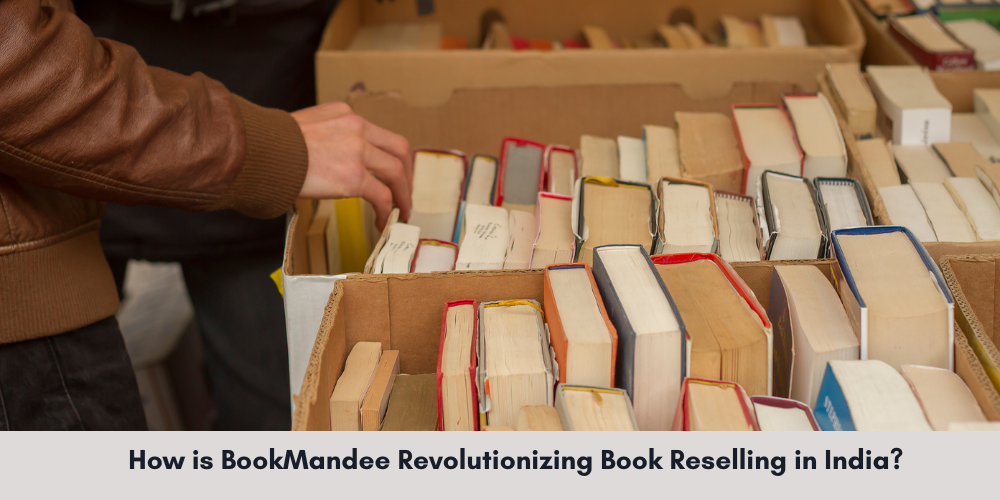
Books have always held a special place in our home. Every Indian reader has their unique story about a beloved second-hand find, whether it’s a stack of school textbooks passed down from siblings or yellowing paperbacks picked up from a footpath bookstall. There’s something deeply comforting and often nostalgic about holding a book that’s travelled from one reader to another.
As much as you cherish books, many of you must be having a cupboard (or two) crammed with old books that haven’t been touched in years. Some are too precious to part with and many just sit there gathering dust, long after they’ve served their purpose. Now imagine if all those unused books could find a new home, a new reader, a new story to be part of.
That’s exactly where the idea of book reselling is finding new life in India. What was once limited to college pavements and local vendors is now slowly becoming more organised, more accessible, and more exciting. Reselling books is both practical and meaningful in a world where conscious consumption is catching on and sustainability is more than just a buzzword.
Over the past few years, a quiet but steady shift has been happening. More Indians have begun to see the value in giving their old books a second (or third) life. While the tradition of sharing and passing down books is nothing new to us, what’s changed is how we do it.
In this post, we explore how this movement is picking up pace with BookMandee and how one home-grown initiative is helping everyday Indians become part of this beautiful, growing story of literary circulation.
India’s Second-Hand Book Culture Covering Stories Between the Pages
Second-hand books aren’t just about saving money. They carry a certain charm that new books simply can’t match. This legacy runs deep in India. Used books have flowed through streets, railway station stalls, college campuses, and Sunday morning bazaars for decades. Anyone who has walked through Delhi’s Daryaganj before it shifted, or haggled over prices at Kolkata’s College Street, knows that these aren’t just markets – they’re experiences.
Long before online platforms came into play, book lovers in India had their distinct way of keeping stories alive. Engineering students passed their textbooks down to juniors, school children inherited guidebooks scribbled with notes in the margins, and readers often stumbled upon rare literary gems in unexpected corners of their city. Second-hand books were never bought but discovered.
What made these markets even more special was the human connection. There was always that one vendor who knew exactly where to find an out-of-print classic or who remembered your reading tastes better than any algorithm. The joy was in the browsing, the banter, the serendipity of finding something you didn’t know you were looking for.
This culture shaped generations of readers. It taught us that a book’s value doesn’t diminish just because it’s been read before. If anything, it grows. Even today, that legacy continues to live on as the world becomes increasingly digital. Only now, it’s finding new ways to adapt and reach more people.
Why Are Today’s Readers Choosing Second-Hand First?
Open Instagram. Scroll through reels. You’ll likely find a reader talking about minimalism, decluttering, or why they’ve stopped buying brand-new books altogether. This isn’t just a trend but a shift in mindset.
Once upon a time, being a book lover meant collecting shelves full of titles, whether they were read or not. It’s just as much about letting go as it is about holding on.
Meet the modern Indian reader:
Environmentally aware and not shy to talk about it
Budget-conscious, but still craving meaningful stories
Digitally connected, yet nostalgic about the smell of old books
Willing to share, swap, donate, and resell because stories are meant to travel.
This new generation isn’t only asking what should it read next. They’re also asking what happens to my book after I’m done with it. What we’re witnessing is a new form of literary responsibility.
Reselling books is no longer a backup option. It’s a deliberate choice that reflects values of sustainability, community, and trust in circular culture.
Turning a Scattered Practice into a Seamless Book Exchange
For a long time, book reselling in India operated in scattered pockets via street stalls, local exchanges, or informal college networks. While the intent to reuse books existed, there was no structured way to connect those who had books with those who needed them. Much of the process relied on being at the right place at the right time.
This gap was cultural and geographical. Students in small towns often lacked access to affordable academic books, while urban homes had shelves full of unused material. Parents looking to donate their children’s early learning books rarely found recipients beyond their immediate circles. Similarly, readers trying to declutter often hesitated because the process of reselling felt inconvenient or uncertain.
That’s where technology began to play a key role. BookMandee started streamlining the process, bringing structure, trust, and reach into what was once an informal practice. It allows individuals to list, browse, and connect over second-hand books with just a few clicks, thereby removing traditional barriers.
What once depended on chance now benefits from community, convenience, and intent. It’s no longer just about selling a book but ensuring it reaches where it’s truly needed.
BookMandee: A Homegrown Story Making Book Reselling a Movement
India has no shortage of readers. What it lacked (until recently) was a unified way to share books across homes, cities, and communities. That’s where a quiet but powerful shift began, led by homegrown efforts rooted in empathy, need, and a deep love for books.
While many platforms exist to sell or trade items, few are built with the emotional and cultural nuances of book sharing in mind. BookMandee is one such initiative curated with a simple belief: books aren’t meant to be stored away. They’re meant to circulate, inspire, and live on.
What began as a small idea of helping people declutter and rediscover the joy of giving old books a new home, has started to grow into a movement.
What Sets BookMandee Apart?
Here’s what this growing initiative brings to the table:
- Community-first approach
It isn’t only about transactions but connections between like-minded readers.
- Ease of use
The process of uploading a book-ad, browsing, and sharing old books is made simple for everyone to use.
- Stories behind the books
Each old book often carries a backstory, a memory. The platform encourages users to share those narratives when they list a book.
- From cities to smaller towns
The aim is not to stay limited to urban areas but to make book circulation a habit across India.
Whether it’s a student in Pune reselling JEE prep books to someone in Ranchi, or a mother in Bengaluru donating storybooks her child has outgrown, BookMandee aims to give purpose to books that would otherwise remain idle.
For every book that finds a new reader, something bigger takes shape: a mindset that values sharing, sustainability, and community-led impact.
The New Culture of Book Sharing and Letting Stories Travel
Buying and selling second-hand books may seem like a simple exchange. If you look closer, there’s something far more meaningful unfolding beneath the surface.
What began as individual acts of decluttering or saving money is slowly turning into a shared culture of literary flow. This is where books aren’t just personal property but shared stories meant to move, inspire, and connect.
In traditional reselling, the goal is often transactional – get something, give something, and move on. However, reselling books at BookMandee is not the end of a book’s journey but a continuation.
People have begun to look at their personal libraries differently, seeing books not as possessions to store but living resources that deserve to be read again and again. It allows:
Circular reading in which a book passes from one reader to the next, extending its life and relevance
Emotional sharing as users often leave notes, bookmarks, or personal reflections inside the books they resell
Books are no longer titled as ‘used’ but ‘pre-loved’. The vocabulary is shifting, and so is the attitude. This cultural shift offers more than convenience. It can help:
Reduce book waste
Promote affordable access to quality reads
Encourage mindful ownership
Build a more connected reading community
In short, literary circulation is no longer a fringe idea. It’s becoming a thoughtful, collective practice. Every book that changes hands carries not just ink and paper, but a little bit of someone’s story.
The Chapters Yet to Be Written
The story of book reselling in India is far from finished. In many ways, it is only just beginning. As more readers embrace the idea of sharing old books beyond their personal shelves, a new chapter filled with possibility, connection, and sustainable habits unfolds.
BookMandee movement is about changing how we value stories, knowledge, and community. It invites every reader, young or old, to participate as contributors to a living culture of literary circulation.
Looking ahead, the potential is vast. Every book resold or donated carries with it a promise that stories will continue, that learning will persist, and that the joy of reading will keep spreading. While many chapters remain unwritten, the pages are open. The journey continues, and it’s one that all readers can be part of.
Way2World invites you to follow our pages on Facebook and LinkedIn. #Way2World provides insights and news regarding #Founders, #Co-Founders, #WomenEntrepreneurs, #WomenLeaders, #Mentors, #Innovation, #Incubators, #Accelerators, and #Listing. Our #Articles, #Reviews, and #Stories explore topics related to #Funding, #IndianStartUps, their #BusinessServices, as well as the impact of #Technology. Please note that this content, including images, is generated with the assistance of AI tools and is intended solely for informational purposes regarding current trends. It is not a recommendation. We advise conducting thorough analyses tailored to your specific needs and consulting with experts in the field. Content includes contributions from the Internet.
DISCLAIMER: The information presented in this news item is intended solely for informational purposes and should not be interpreted as professional advice, legal opinion, or endorsement by WAY2WORLD.
We cannot guarantee the accuracy, completeness, or timeliness of the information provided. WAY2WORLD and its affiliates disclaim any liability for errors, omissions, or damages resulting from reliance on this content.
Readers are strongly encouraged to verify information through multiple sources and to consult with qualified professionals before making decisions based on this material.
The views expressed in this news item reflect the opinions of the author(s) and do not necessarily represent those of WAY2WORLD or its affiliates.
WAY2WORLD does not endorse or promote any specific product, service, or organization mentioned herein unless explicitly stated. We urge readers to exercise their discretion and judgment when interpreting and applying the information.
Comments made in this space do not represent the views of WAY2WORLD. Individuals posting comments assume full responsibility for their content. In accordance with Central Government IT regulations, any obscene or offensive statements against individuals, religions, communities, or nations are punishable offenses and legal action may be pursued against violators.